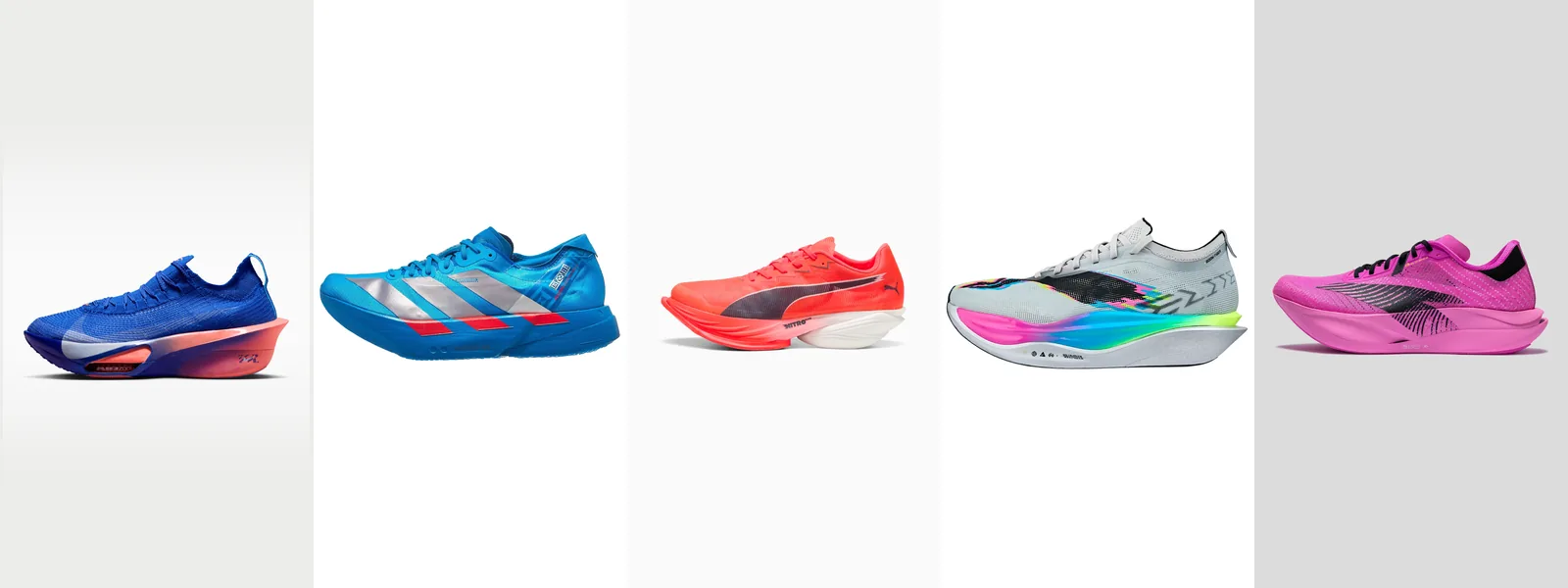
Li-Ning and Anta are no longer budget copies of Western brands. In running shoes they match Nike, Adidas and Puma on foam and plate technology, usually undercut them on price, and in Anta's case now own a large slice of Puma. What they still lack outside China is reach: fewer shops, narrow fits and patchy returns. The technology gap has closed; the access gap has not.
On 7 October 2026, Anta Sports finished buying 29.06% of Puma for about €1.5 billion and became its largest shareholder. Twenty years ago that sentence would have read as a joke. Today it is the clearest sign of how far China’s two biggest sportswear brands, Anta and Li-Ning, have come — and running shoes are where the change shows most.
This guide sets out who the five brands are, where they came from, what each sells runners, who they are trying to reach and where their paths cross. It opens a short series; the shoe-by-shoe matches follow at the end.
What follows is drawn from company results, brand announcements and reporting, each linked. Where something is a company’s own claim rather than an independent figure, it is labelled.
The five brands at a glance
| Nike | Adidas | Puma | Li-Ning | Anta | |
|---|---|---|---|---|---|
| Founded | 1964, as Blue Ribbon Sports | 1949 | 1948 | 1990 | 1991 |
| Home | Oregon, US | Herzogenaurach, Germany | Herzogenaurach, Germany | Beijing, China | Jinjiang, Fujian, China |
| Founder | Phil Knight, Bill Bowerman | Adi Dassler | Rudolf Dassler | Li Ning, Olympic gymnast | Ding Shizhong |
| Latest full-year sales | US$46.4bn (to May 2026) | €24.8bn, adidas brand (2025) | €7.3bn (2025) | RMB 29.6bn (2025) | RMB 80.2bn, group (2025) |
| Direction | Flat; China down 11% | Up 13%; China up 13% | Down 8.1% in a “reset” year | Up 3.2% | Up 13.3% |
| Running foam | ZoomX, ReactX | Lightstrike Pro | Nitro, Nitro Elite | BOOM, Super BOOM | Nitrogen-infused foams |
| Flagship racer | Alphafly 3 | Adios Pro 4 / Adios Pro Evo | Fast-R Nitro Elite 3 | Feidian 6 Ultra / Elite | C202 7 |
Sales figures: Nike, Adidas, Puma, Li-Ning, Anta. Growth rates are as each company reports them, mostly currency-neutral.
Two notes on that table. Li-Ning’s founding year appears as 1989 in some sources and 1990 in others. And the totals are not like for like: Anta’s figure covers a whole family of brands, including FILA in China, while the Adidas figure is the adidas brand only. In US dollar terms Anta Group’s 2025 revenue was about US$11.6bn — larger than Puma, smaller than Nike or Adidas.
The Western three: one family feud and a waffle iron
Adidas and Puma began as one company. Brothers Adi and Rudolf Dassler made shoes together in Herzogenaurach from the 1920s, fell out, and split the business in 1948. Rudolf founded Puma that year; Adi registered Adidas in 1949. The two headquarters still sit in the same small Bavarian town.
Nike started in 1964 as Blue Ribbon Sports, a distributor for a Japanese shoe brand, set up by runner Phil Knight and his Oregon coach Bill Bowerman. It became Nike in 1971.
In running, the modern story is the “super shoe”. Nike’s Vaporfly 4% arrived in 2017, pairing soft, springy foam with a carbon plate, and Eliud Kipchoge ran 1:59:40 for the marathon distance in a prototype Alphafly in 2019. Adidas answered with the Adizero Adios Pro line; the Adios Pro Evo 1 weighed about 138 g, and Tigst Assefa wore it to a 2:11:53 marathon world record in Berlin in 2023. Puma had largely stepped away from serious running and rebuilt its range around Nitro foam from 2021. It is now the official partner of HYROX.
The people move too. Adidas’s chief executive, Bjørn Gulden, ran Puma until 2022. Puma’s chief executive, Arthur Hoeld, came from Adidas.
Li-Ning: the gymnast’s brand
Li Ning won three gold medals, two silvers and a bronze in gymnastics at the 1984 Los Angeles Olympics, the most of any athlete at those Games. He started his company around 1990, and it listed in Hong Kong in 2004. His family investment company still owns more than 10%.
Its path has been uneven:
- 1992–2004: official kit partner of the Chinese Olympic Committee.
- 2008: Li Ning lit the cauldron at the Beijing Olympics opening ceremony, even though Adidas was the official sponsor.
- 2010: a rebrand with a new logo and slogan, and a US headquarters and flagship store in Portland, Oregon — Nike’s home state.
- 2012–2014: three straight years of losses as it cleared stock and closed shops.
- 2018 onwards: a recovery led by “China Li-Ning” fashion collections shown at international fashion weeks.
- 2022: US Customs detained Li-Ning shoes under a sanctions law relating to North Korean labour, per FashionUnited. Li-Ning said it complies with Chinese law. It has no US store today.
- 2025: won back the Chinese Olympic Committee partnership from Anta for 2025–2028, at a reported fee of about RMB 800 million, per KrASIA.
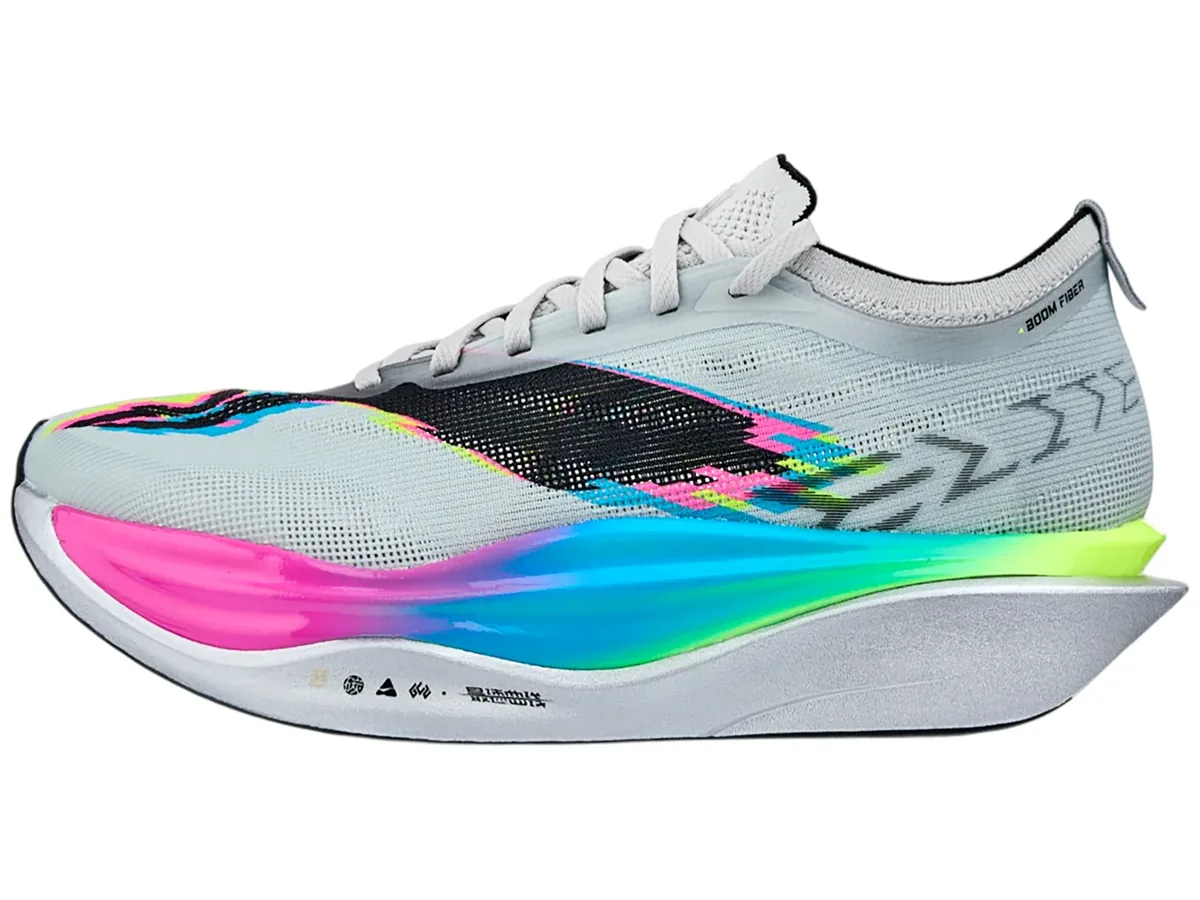
Running is now Li-Ning’s engine. It rose from 16% of retail sales five years ago to 31% in 2025, with more than 26 million pairs of professional running shoes sold, per KrASIA. Its credibility moment came in December 2025, when Suguru Osako — once a member of Nike’s Oregon Project — set a Japanese marathon record of 2:04:55 in Valencia in a Feidian 6 Elite, per Runner’s Verdict. In June 2026 Li-Ning also signed a long-term deal with Stephen Curry, but that one starts with basketball and golf, not running.
Anta: from Jinjiang factory to Puma’s biggest shareholder
Ding Shizhong founded Anta in 1991 in Jinjiang, Fujian, a city full of shoe factories. It listed in Hong Kong in 2007. Where Li-Ning stayed a single brand, Anta built a portfolio:
- 2009: bought the FILA brand rights for mainland China, Hong Kong and Macau.
- 2009–2024: sixteen years as the Chinese Olympic Committee’s kit partner.
- 2018–2019: led the consortium that bought Amer Sports, owner of Salomon, Arc’teryx, Wilson and Atomic.
- 2025: Jack Wolfskin joined the group.
- December 2025: debuted Anta Running at The Running Event in San Antonio, the main US trade show for running shops, fronted by Ethiopian great Kenenisa Bekele, per Retail Boss.
- February 2026: announced its first permanent US store, in Beverly Hills, with run clubs and performance running product, per Retail Insight Network.
- October 2026: completed the Puma stake, per Pulse 2.0. Anta says it has no plans for a full takeover and will respect Puma’s independence, but will seek seats on Puma’s supervisory board.
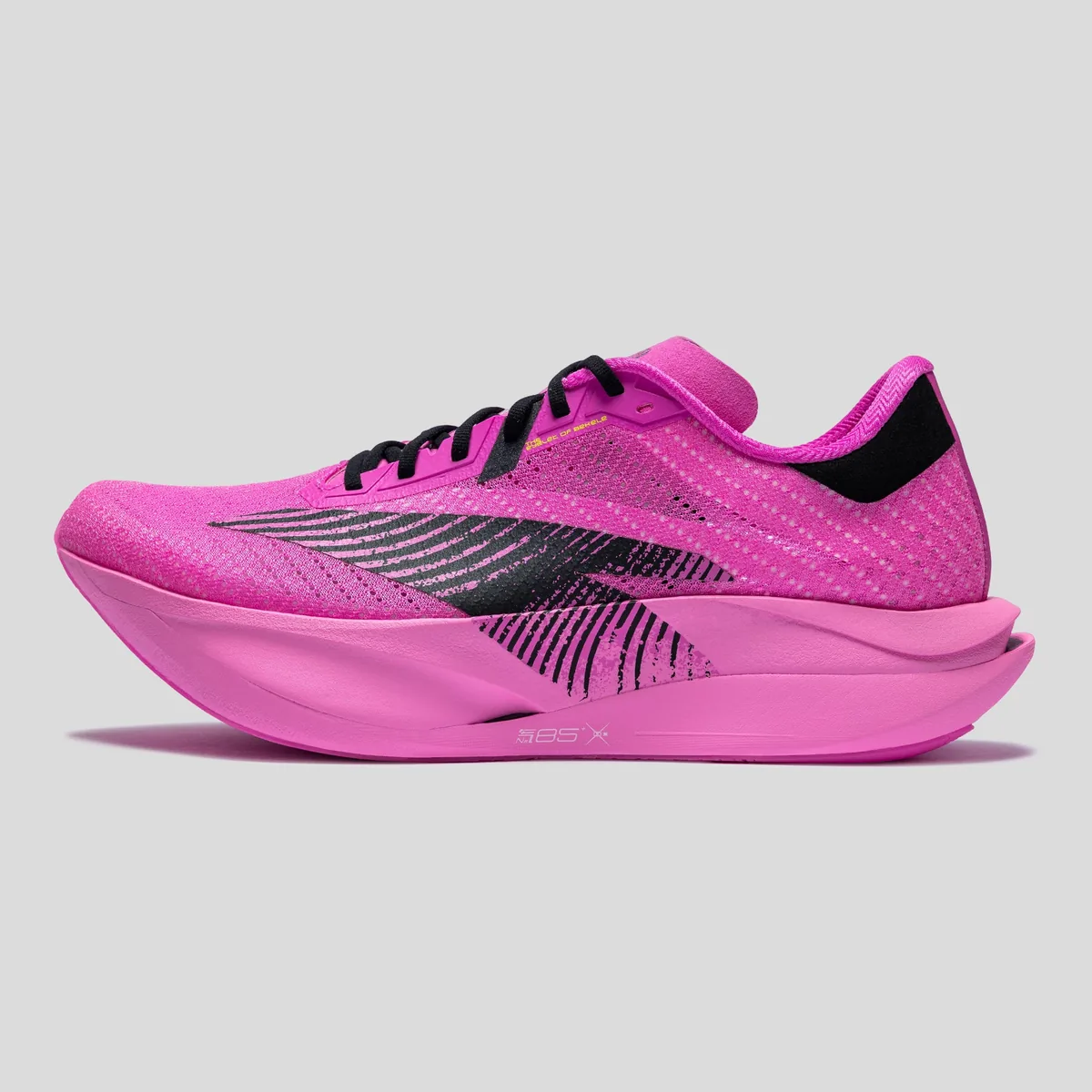
The Anta brand itself, at RMB 34.8bn in 2025, grew only 3.7%. The group’s growth came from FILA and its other brands.
Where their paths cross
| Year | What happened | Brands |
|---|---|---|
| 1948–49 | Dassler brothers split into Puma and Adidas | Puma, Adidas |
| 1992–2004 | Li-Ning dresses China’s Olympic team | Li-Ning |
| 2008 | Adidas is Beijing’s official sponsor; Li Ning lights the cauldron | Adidas, Li-Ning |
| 2009 | Anta takes the Olympic partnership and buys FILA China | Anta |
| 2010 | Li-Ning opens a US base in Portland, Oregon | Li-Ning, Nike |
| 2022 | Li-Ning goods detained at the US border | Li-Ning |
| 2023 | Adidas hires Puma’s former chief executive | Adidas, Puma |
| 2025 | Li-Ning takes the Olympic partnership back from Anta | Li-Ning, Anta |
| 2025 | Ex-Nike Oregon Project runner sets a national record in Li-Ning | Li-Ning, Nike |
| 2026 | Anta becomes Puma’s largest shareholder | Anta, Puma |
The running ranges side by side
Each brand now sells a full ladder, from race-day super shoe to beginner trainer.
| Role | Nike | Adidas | Puma | Li-Ning | Anta |
|---|---|---|---|---|---|
| Marathon super shoe | Alphafly, Vaporfly | Adios Pro, Adios Pro Evo | Fast-R, Deviate Nitro Elite | Feidian Ultra, Feidian Elite | C202 |
| Plated trainer | Zoom Fly | Boston | Deviate Nitro | Feidian Challenger | C10 Pro |
| Light fast trainer | Pegasus Plus | Adizero Evo SL | Velocity Nitro | Chaoying (Super Shadow) | — |
| Daily trainer | Pegasus | Adizero SL | Velocity Nitro | Red Hare | PG7 |
| Max cushion, easy runs | Vomero | Supernova, Adistar | MagMax Nitro | Red Hare Ultra, Yueying | Zone 2 |
Anta’s names come from its own launches; its range is less consistently published in English than Li-Ning’s, so the gaps above may be gaps in information rather than in product.
The technology is now broadly level. All five use lightweight supercritical or PEBA-family foams in their top shoes, and all five plate their racers with carbon. The difference is in tuning, fit and price, not in what the shoes are made of.
Who each brand is for
| Brand | Main market | Positioning | Australian flagship racer price |
|---|---|---|---|
| Nike | Global | Premium; leads with elite athletes | Alphafly 3, A$390 |
| Adidas | Global | Premium; Adizero racing family has strong momentum | Adios Pro 4, A$360 |
| Puma | Global | Value-led performance; football, HYROX | Deviate Nitro Elite 4, A$340 |
| Li-Ning | China first; one brand | National pride, Olympic ties; undercuts Western flagships | Feidian 6 Elite, A$299.95 |
| Anta | China first; many brands | Mass-market at home, premium through FILA and Amer; now pushing overseas | Not stocked locally; C202 6 Pro US$224 on Anta US |
Australian prices checked 11 October 2026 on each brand’s AU store and Running Warehouse AU. The Anta price is from our C202 6 Pro check, 23 September 2026.
Why the Chinese brands are rising now
Fact: China is running. The Chinese Athletics Association counted 749 road races with more than seven million participants in 2024, per RunRepublic. That is a huge home market of serious runners to sell to and learn from.
Fact: the foams caught up. Li-Ning’s BOOM and Anta’s nitrogen foams sit in the same material family as ZoomX and Lightstrike Pro. Independent lab testing puts the Feidian 6 Elite level with the Alphafly 3 for energy return — covered in Li-Ning vs Nike.
Fact: they cost less. In Australia the Feidian 6 Elite is A$40–A$90 below the three Western flagships.
Strong inference: home advantage. Nike’s Greater China sales fell 11% in its latest year while Anta and Li-Ning grew. But Adidas grew 13% in China over the same period, so this is not simply Chinese brands beating Western ones. It looks more like Nike losing ground that both Chinese brands and Adidas are picking up.
Company claims, not independent figures: Xtep, another Fujian brand, says Frost & Sullivan research ranks it first by marathon shoe wear rate in China for 2023–2025, per its own press release. 361 Degrees has opened an Australian storefront. Li-Ning and Anta are the biggest names in the wave, not the only ones.
What it means if you buy shoes outside China
- Availability is the real gap. Running Warehouse AU stocks Li-Ning’s racers and Red Hare 9 Ultra; Anta reaches Australia mostly through importers such as ProjectCN — see the Zone 2 90 price check. Everything else means importing.
- Fit runs narrow. Lab testing describes Li-Ning arches as very narrow. Try before you buy if you have wide feet.
- Claimed specs drift. Several Li-Ning shoes measured more heel-to-toe drop than the brand claims. Check independent figures.
- For hybrid racers: whichever brand you pick, a carbon racer is the wrong tool for the sled — see carbon plates in HYROX.
What to watch
These are open questions, not predictions.
- Anta and Puma. Anta says Puma stays independent. Whether Puma’s running range starts sharing Chinese supply chains, retail or materials is worth watching through 2027.
- Anta in the US. A Beverly Hills store and a trade-show debut are a start. Whether running shops actually stock it is the real test.
- Li-Ning abroad. Curry is a basketball deal, but it buys global attention. Li-Ning’s own 2026 outlook still focuses on China.