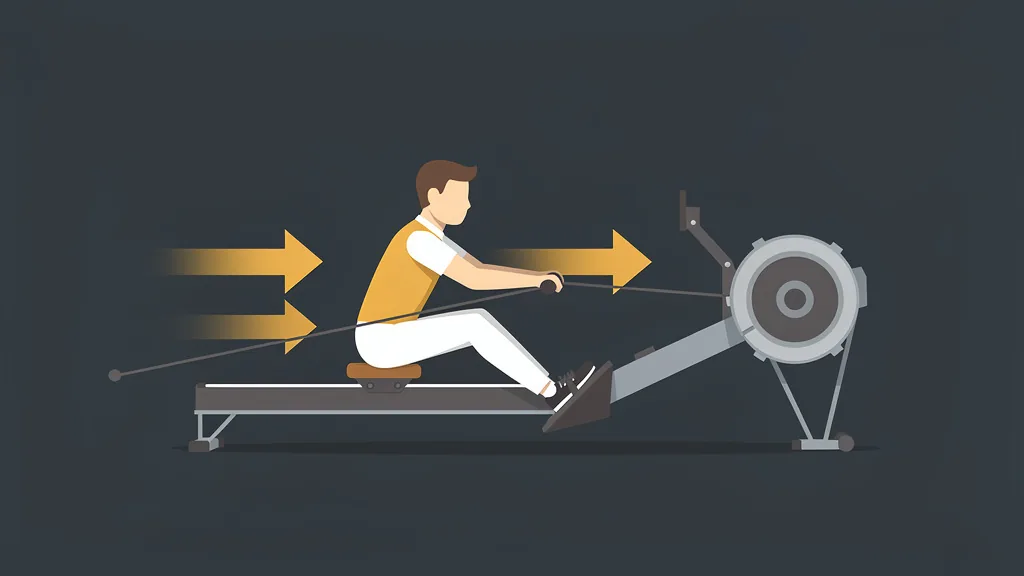
The rower appears in most hybrid races. Good technique makes it faster and less tiring, which matters when it comes mid-race.
The stroke sequence
The drive is legs, body, arms. The recovery is arms, body, legs.
The catch
Sit tall, shins roughly vertical, arms straight, leaning slightly forward from the hips.
The drive
- Push with your legs.
- As your legs straighten, swing your body back slightly.
- Finally, pull the handle to your lower ribs.
The finish
Legs straight, body leaning slightly back, handle at your lower ribs, elbows past your body.
The recovery
- Arms extend.
- Body swings forward from the hips.
- Knees bend and you slide forward.
Common mistakes
- Arms too early: pulling with the arms before the legs are done.
- Rushing the recovery: sliding forward too fast. The recovery should take longer than the drive.
- Hunching: rounding the back. Sit tall.
- Too high a damper: makes each stroke heavy.
Stroke rate
A moderate stroke rate with a strong drive is usually more efficient than a high rate with weak strokes.
Drills
- Legs only: arms straight, body still. Feel the leg drive.
- Pause drills: pause at the finish or with arms extended to practise the sequence.
Sessions
- 4 × 1000 m at race pace, 2 minutes rest.
- 20 minutes steady at an easy pace.
Related
HYROX row pacing covers race day.