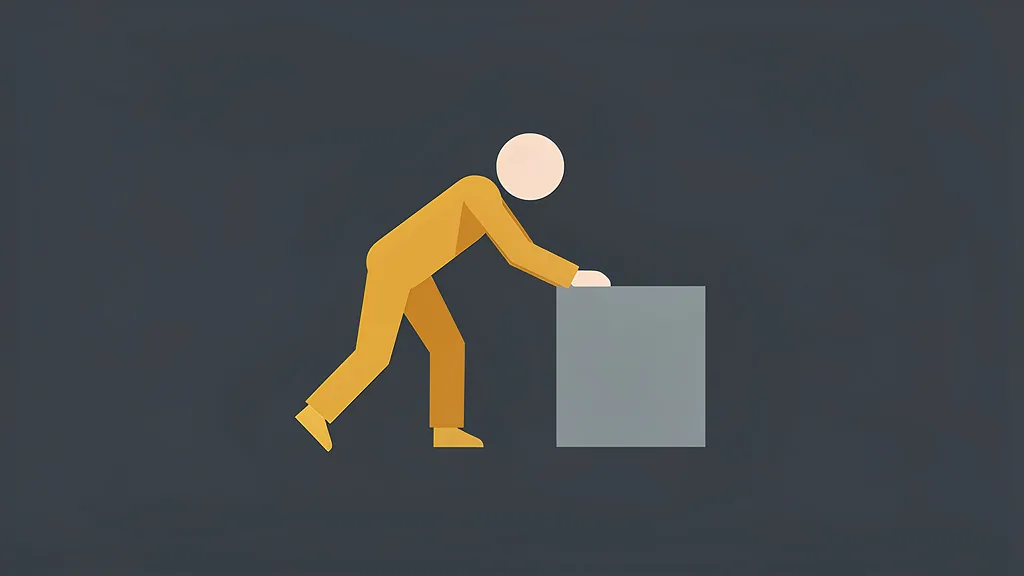
The sled push is 50 metres, and for many racers it is the slowest station on the course. It feels like it should be pure strength. It is mostly technique and friction, and both can be trained.
Get low early
The best position is a strong forward lean, with your body close to a straight line from head to back foot. A low angle means your legs push the sled forward rather than down into the floor. Standing upright makes you push the sled into the carpet, which adds friction and slows you down.
Arms: straight or bent
There are two common hand positions. Straight arms at the top of the poles give you a long lever and a lower body angle, but put more load through your shoulders. Bent arms with your chest closer to the poles feel more stable and suit shorter racers. Try both in training. Use whichever lets you keep your hips low without your back rounding.
Short, quick steps
Long strides feel powerful, but they make the sled stop and start. Short, quick steps keep it moving. A sled already in motion is far easier to keep going than a stopped one is to restart.
Drive through the front of the foot
Push through the balls of your feet, not your heels. This is why shoe choice matters here more than at any other station: you need grip on the carpet and a forefoot that does not fold. See outsole grip on race carpet.
Do not stop mid-lane
The worst thing you can do is stop halfway. Restarting a heavy sled from rest on carpet is the hardest part of the station. If you have to rest, slow down but keep it moving. If you do stall, drop your hips, lean further in, and take several short, sharp steps to break it free.
Turns
Most venues have you push the sled down and back in lanes. At the turn, move around to the other side rather than trying to pull it back. Get set, low, and start with short steps again.
Breathing
Breathe in short, sharp bursts. Holding your breath for the whole length is tempting and leads to a sudden, hard stop.
Training it
If your gym has a sled, push it on carpet or turf whenever you can, not just on smooth floors. Heavy, short pushes build strength; lighter, longer pushes build the ability to keep moving. Without a sled, see training the sled without a sled.
The run afterwards
Your legs will feel empty on run three. That is normal. Jog the first 200 metres, let the blood come back, and then settle into your pace.