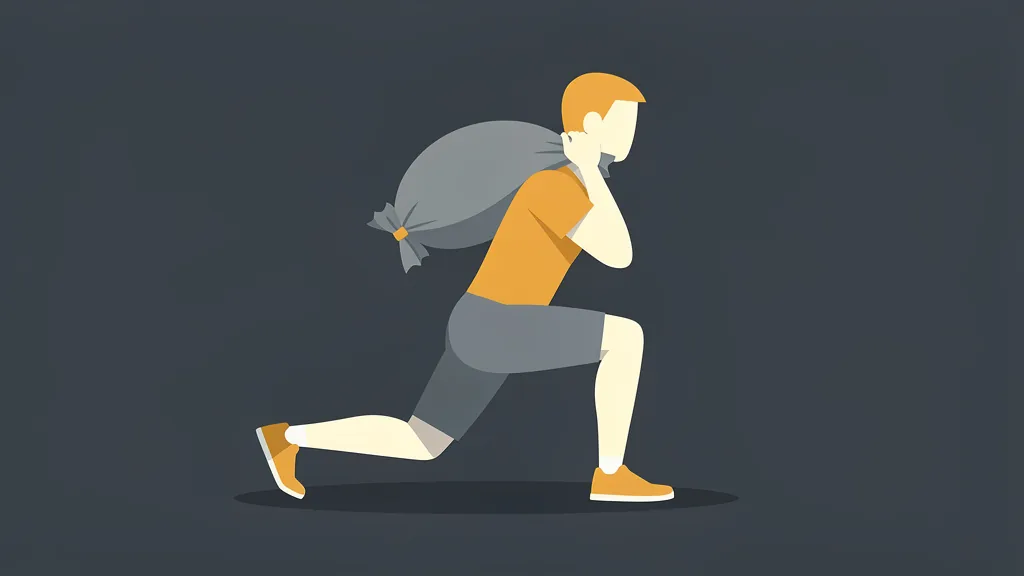
The sandbag lunges are 100 metres of walking lunges with a sandbag on your shoulders. They come seventh, after most of the race is done. For many racers this is where their legs finally give up.
The standard
Each lunge needs your back knee to touch the ground, and you must stand fully between steps. Judges watch for both. A lunge that does not count still costs you the energy, so meet the standard every time. Check the current rulebook for the exact wording.
Bag position
Rest the bag across your upper back and shoulders, behind your neck, and hold it with both hands. Keep it steady so it does not shift as you move. A bag that moves around takes extra effort to control. Tall socks and a shirt with a collar can stop it rubbing your neck — small details that matter over 100 metres.
Step length
Take a step long enough that your front knee stays roughly above your ankle, not so long that you strain to stand up. Too short and your knee travels far forward; too long and each rep becomes a big effort. Find a comfortable length in training and use it.
Stay upright
Keep your chest up and your body upright. Leaning forward puts more load on your lower back and makes standing up harder.
Use your front leg
Drive up through the heel and middle of your front foot. Pushing with the back leg feels natural but tires you faster.
Pace and rest
A steady rhythm is better than bursts. If you need rest, stand upright with the bag on your shoulders for a few seconds rather than dropping it. Picking the bag back up costs time and energy.
Shoes
A shoe that bends easily at the forefoot makes the back-leg step easier. Very stiff shoes can make the movement awkward. Stack height and stability covers the trade-offs.
Training it
Walking lunges with a sandbag or weight, at race distance, after other leg work. Include them in long sessions so you get used to lunging tired. Lunge endurance has a full progression.
After the lunges
Your legs will be shaky on the final run. Keep it steady — wall balls are waiting, and they are much harder if you arrive gasping.