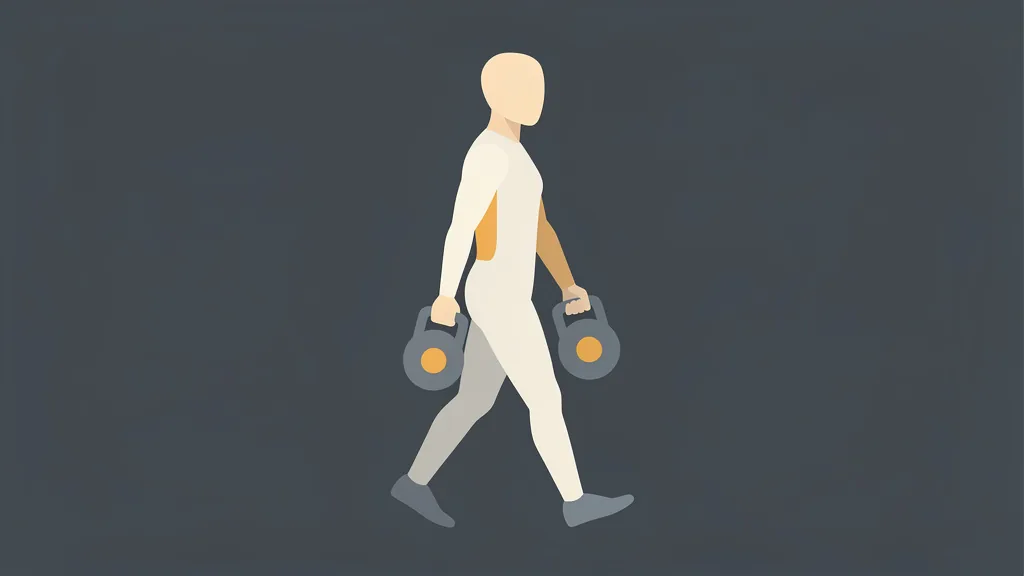
The farmers carry is 200 metres holding a kettlebell in each hand. The weights are not heavy for most trained racers when fresh. The difficulty is doing it after five stations, with your grip already worn down by the SkiErg and sled pull.
Posture
Stand tall with your shoulders back and down, and your chest up. Brace your core as if someone is about to push you. Letting your shoulders round forward makes the carry harder and puts strain on your back.
Grip
Hold the handles firmly, but not with a death grip — squeezing as hard as possible tires your forearms faster. Grip the middle of the handle so the weight hangs evenly. Chalk before you pick up if your hands are sweaty.
Walk quickly with short steps
Short, quick steps are more stable and faster than long strides. The kettlebells swing less, and you use less energy controlling them. Walk as fast as you can while staying smooth. Some racers can jog; most do better with a fast walk.
Plan your break
If you know you will need to put the weights down, plan it. One deliberate break at a set point — say halfway — is better than several forced ones when your grip gives out. Put the weights down under control, shake your hands out for a few seconds, and pick them up again.
Setting down and picking up
Squat to put the weights down and to pick them up. Do not bend over with straight legs. It saves your lower back, which you still need for the lunges and wall balls. See protecting your lower back.
Turns
The carry is usually done in laps. Turn with small steps and keep moving. Do not stop at the turn.
Training it
Heavy carries build grip and posture; longer carries at race weight build endurance. Include both. Add carries after a sled or rowing session to practise them tired. Grip strength training has more detail.
After the carry
The sandbag lunges are next. Shake out your hands and arms as you walk, and get ready for the station that tests your legs more than any other.